Build Your Emergency Fund Before You Enter Crypto
Plenty of beginners want to jump into crypto the moment they have a little money, and then, when something urgent comes up, they can only cash out at the worst possible time. The real first step is not buying a coin. It is putting aside a sum you will not touch no matter what.

We get plenty of messages along these lines: it dropped so much I could not take it, so I sold all my coins. Ask one more question and the answer is usually not that they turned bearish, but that something came up at home, or for them personally, and they suddenly needed the money. That is the quietest and the most regrettable way a beginner loses money: not a wrong read on the market, but no reserves on hand, and life forcing you to sell at the worst possible moment.
Avoiding this kind of loss does not come from learning to read a chart. It comes from something far plainer: before you buy your first coin, put aside an emergency fund. This piece covers what it is, how much you need, where to keep it, and why it has to come before any crypto investing.
What an Emergency Fund Actually Is
An emergency fund is money set aside purely for the unexpected: losing your job, getting sick, an urgent bill at home, a phone or laptop that dies and has to be replaced. None of it announces itself in advance, but some of it will happen. The job of an emergency fund is that when it does, you have cash ready to cover it, without touching your investments, and without reaching for a credit card or a loan.
It has three traits, and it needs all three. 1. Ring-fenced — you touch it only when something real happens, not because the month is tight. 2. Available any time — you can get at it within minutes, so it cannot be a product locked up for years. 3. Stable principal — its job is to be there, not to grow, so it never goes chasing returns.
Why It Comes Before Buying Crypto
Because crypto swings enormously, and life's accidents do not pick their moment. Once those two collide, anyone without an emergency fund is forced into the worst possible move.
Picture it: you put every spare dollar into crypto, and one day the market happens to be down 40%, and that is exactly when your family needs a sum of money. You have no other cash, so you grit your teeth and sell coins that are underwater. What was only a paper loss you could have sat through until it recovered has now become a real one. What cost you money was not the market. It was not having a safety pad.
How Much: Three to Six Months of What
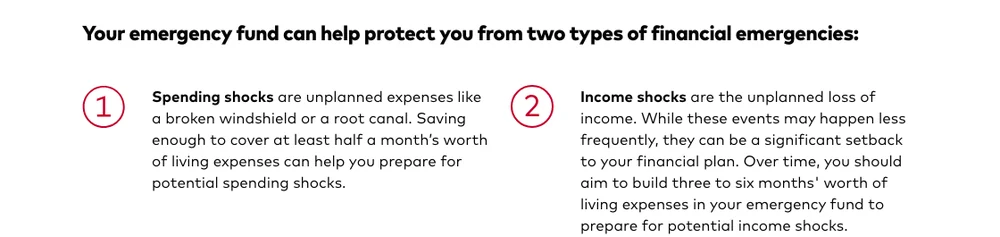
The common standard is three to six months of essential living expenses. Note the key phrase is essential expenses, not income, and not what you would like to spend. It means rent or mortgage, food, utilities, transport and loan repayments, the rigid costs that do not stop even if you stop working.
- Steady income, a solid employer, family who can back you up — three months is a fine place to start.
- Freelance, lumpy income, parents and children depending on you, or living far from home on your own — aim for six months or more.
The maths is simple: add up what you spend each month on the things you cannot cut, then multiply by three to six. That number is what should go into the do-not-touch account before you seriously consider buying crypto.
Where to Keep It: Do Not Chase Yield
The only mission of an emergency fund is to be there at full value when you need it, so it should not sit anywhere that moves: not stocks, certainly not crypto, and even fixed-term products are a poor fit.
The right home is somewhere instantly accessible with stable principal: a savings account, a money market fund, that kind of thing. A low return is fine; it was never meant to earn. The moment you entertain the thought of putting the emergency fund into crypto too, to squeeze out a bit more, it stops being an emergency fund — because on the day something actually happens it may be sitting at a loss, and you are right back on the road to a forced sale. Keeping the money that keeps you afloat completely separate from the money you invest is the one line we most want you to take away from this piece.
Once It Is Full, the Rest Is What You Can Invest
Get the order right and you have a clear pre-entry checklist:
- Clear high-interest debt first (especially credit cards and online consumer loans, where the annual rate runs very high). The interest on those debts is usually well above any steady investment return, so paying them down is a sure gain.
- Then fill the emergency fund (three to six months of rigid expenses, in a savings account or money market fund).
- What is left, money you will not need any time soon, is the part you can put into crypto — and even for that part, be ready for it to shrink badly or go to zero.
Walk those three steps and entering crypto feels completely different: a drop does not panic you, because you do not live on this money; an emergency does not force a sale, because your reserves are elsewhere. Only then do you genuinely meet the conditions for taking part long term with spare money. If you want to go on and work out how to stage and manage that money once it is in, read You Bought Some Crypto — Now What?; for the least stressful way to buy in stages, see What Dollar-Cost Averaging Is.
A Few Common Questions
I do not have much money — should I make some in crypto first and build the emergency fund after? It is the other way round. The less money you have, the less risk you can absorb, and the more you need the safety pad first. Counting on crypto gains to fund it means that if that money falls before you need it, you end up more cornered than you started.
If the emergency fund just sits there, is inflation not eating it? You do lose a little purchasing power, and that is its premium. You pay a small inflation cost in exchange for not having to dump assets cheaply when something goes wrong, and over the long run that trade works out in your favour. It is also only three to six months of expenses, not your whole net worth.
How long until it counts as full? There is no fixed deadline; go at your own pace. Move a set amount into the emergency account every payday, as immovable as paying the rent, and a few months to a year usually does it. The point is building the habit of setting the safety pad aside before talking about investing.
This site keeps Binance referral links only in selected guides. If you sign up and trade through our link, we may earn a commission from Binance, and any benefit for you depends on the platform's current promotion. That is how this site pays for itself, and it does not change what we write. We are an independent third-party information site, not the official Binance website. This piece is personal-finance and risk education and is not financial advice. Crypto prices swing hard and you can lose your entire stake, so take part only with spare money, after you have cleared high-interest debt and filled your emergency fund.